The operating problem
Ouray County’s 2026 road plan states that roughly 90% of its road system is unpaved. Winter weather, spring runoff and summer monsoons compress construction into a narrow season while creating competing repair needs. With limited staff, equipment and funding, the department had to balance daily service, long-lived pavement assets, drainage, high-country access and emergency response.
In the field
Photographs from Ty Barger’s Ouray County collection show some of the terrain and conditions behind these planning choices. They illustrate the work environment; they are not documentation of the particular completed-work entries below.
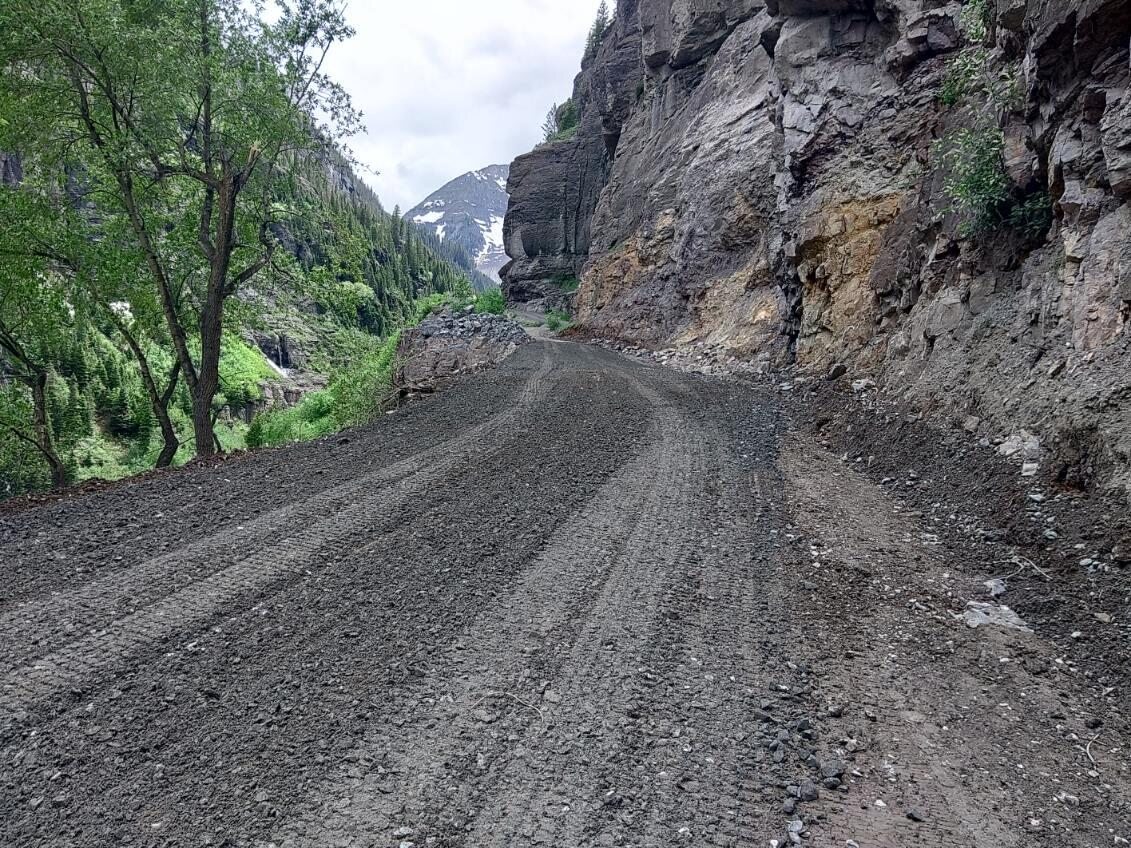
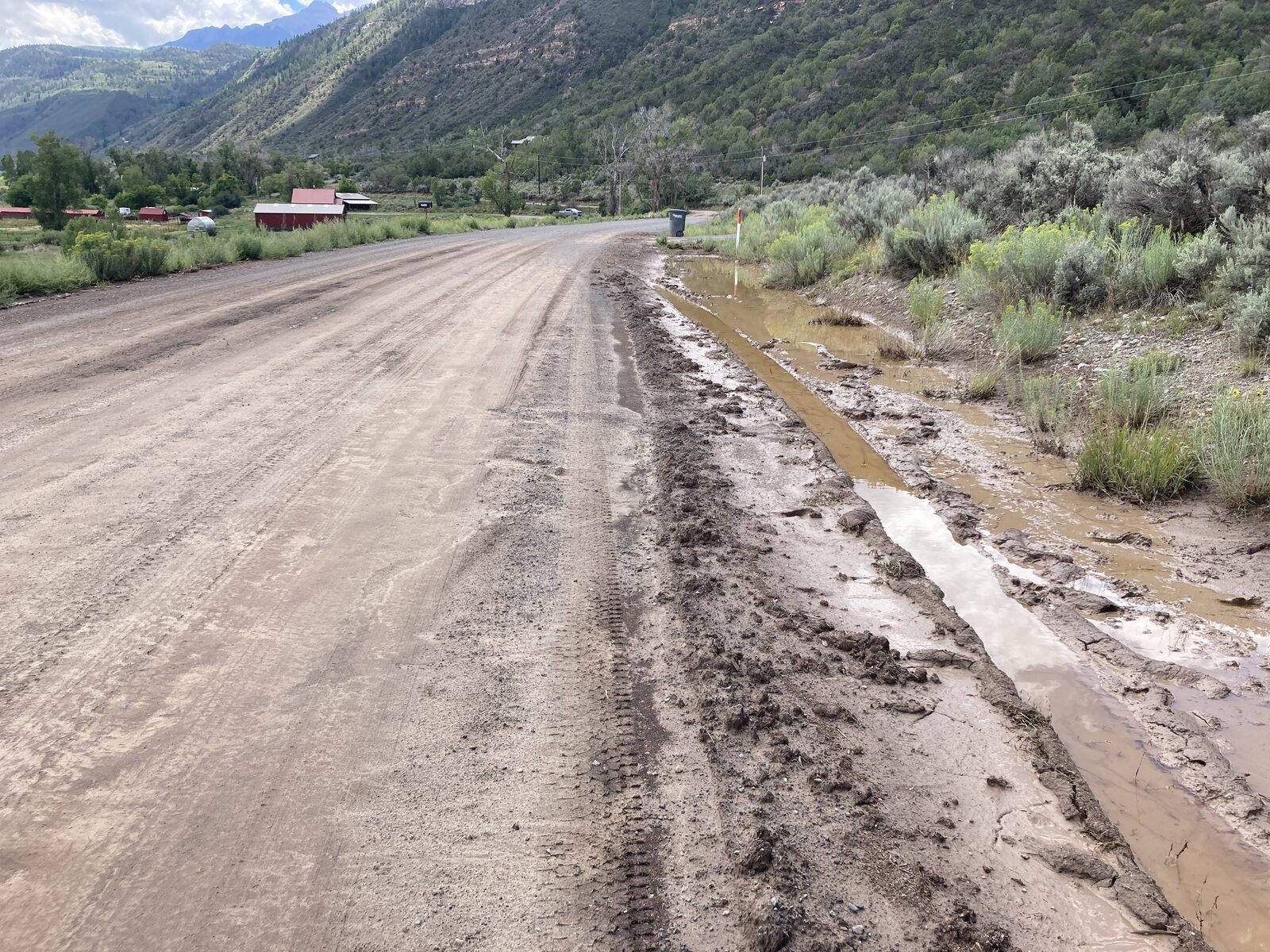
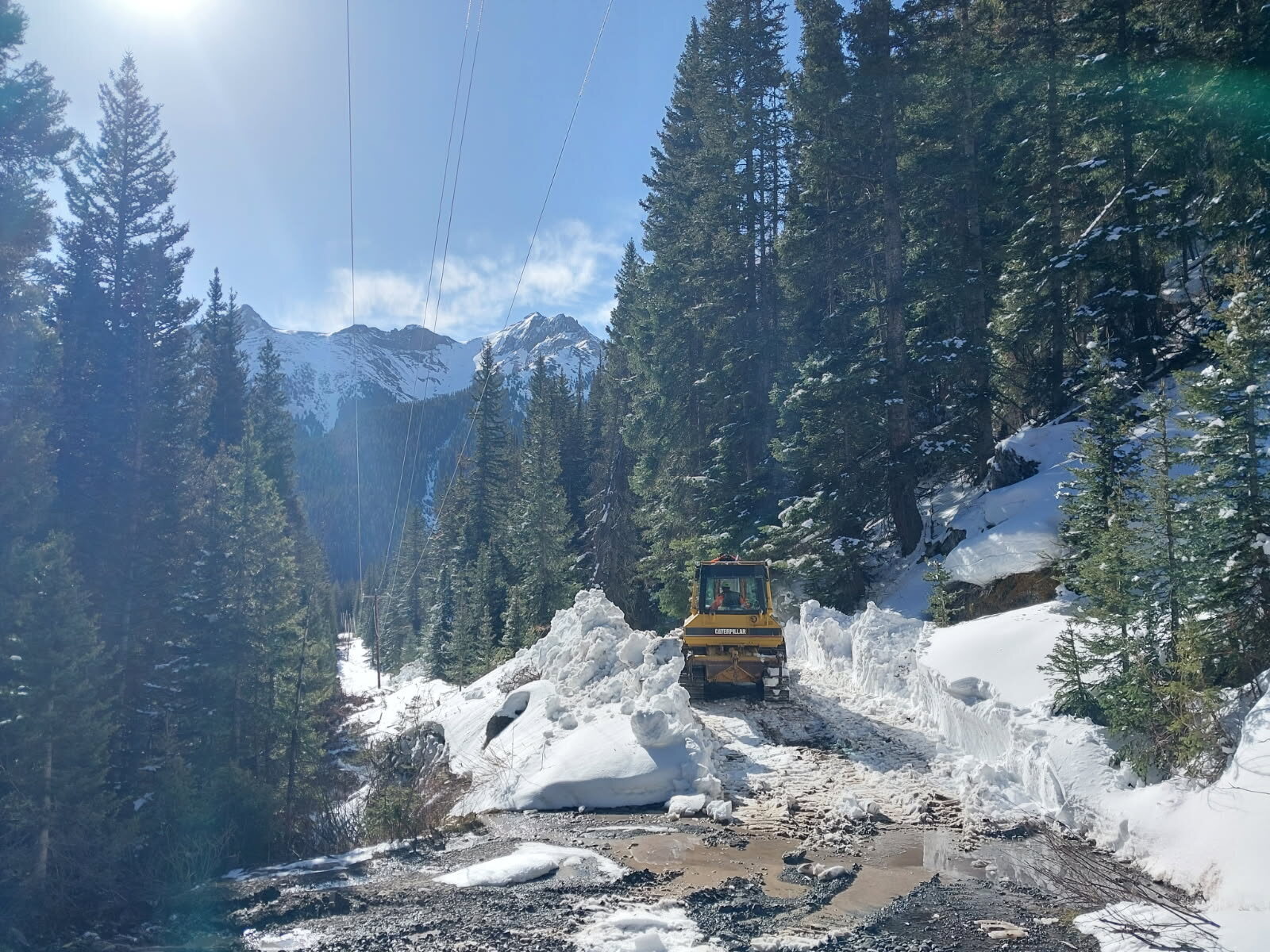
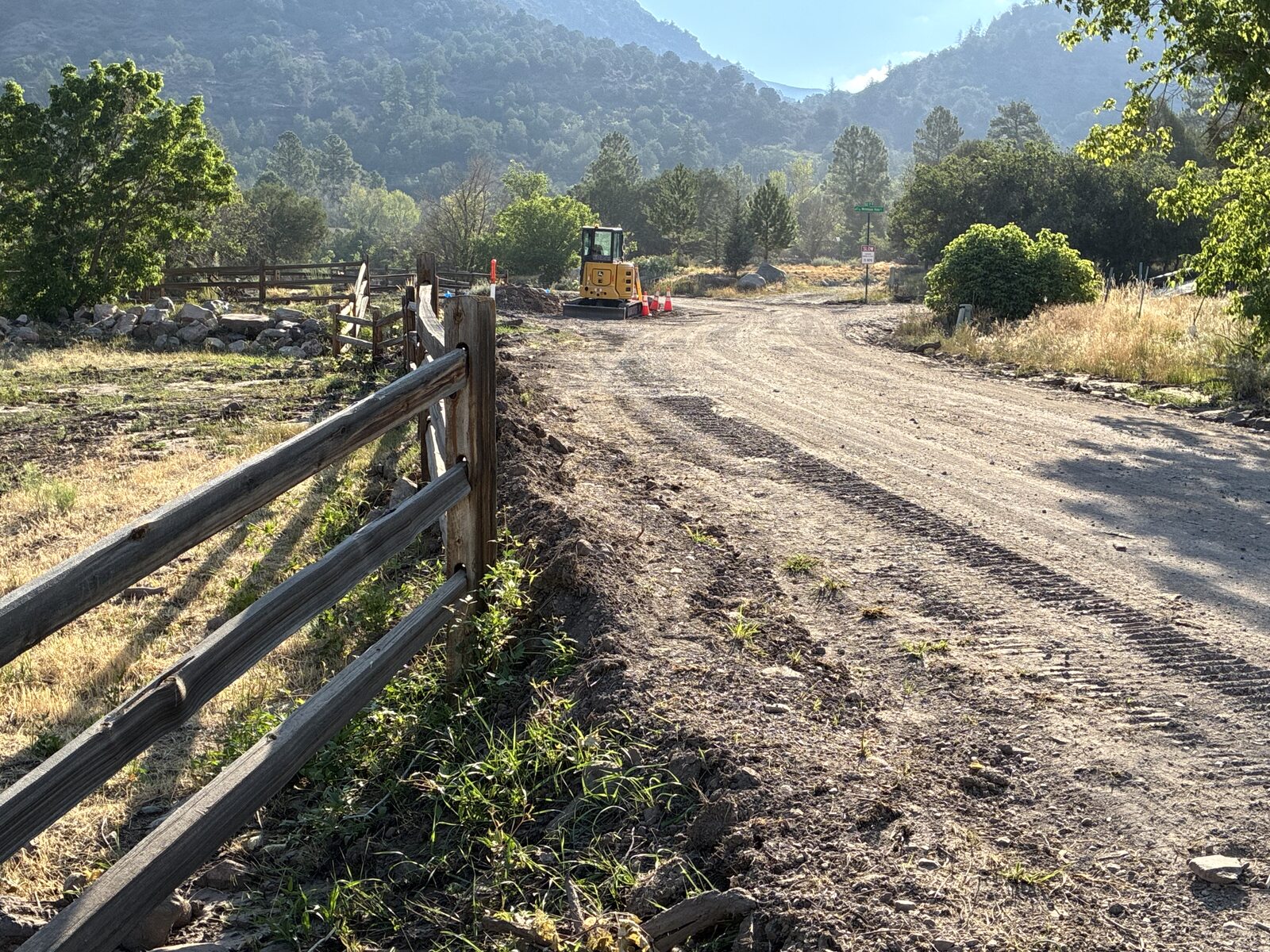
Photographs: Ty Barger.
Ty Barger’s planning system
As Road & Bridge Superintendent, Ty submitted the plans that appear on the County’s public road-plan page. The documents identify a detailed first-year work program and a more illustrative six-year horizon. They pair a summary of proposed projects with a report of previous-year road improvements, maps, dust-control scheduling and winter-maintenance priorities. The 2025 plan and 2026 plan bear the superintendent’s T. L. Barger signature.
The core preservation concept was to apply corrective and preventive treatments across the hard-surfaced network within a repeating six-year cycle. Crack sealing, patching, mastic repairs, chip sealing and fog sealing were sequenced to delay more expensive resurfacing or reconstruction when feasible. The plan explicitly gives the preservation cycle priority when a limited budget prevents all proposed work.
What the published records show
- 2022 CR 1 gravel reconstruction: A County report for September 2022 records 1.8 miles rebuilt north of Snow Bush Drive using 3,800 tons of gravel, 1.3 miles regraded from Wisteria Drive to Snow Bush Drive, and stabilization applied across 3.1 miles from Wisteria Drive north to the chip seal. These treatments cover overlapping parts of the corridor; their mileages must not be summed as separate rebuilt road.
- 2024 completed-work example: The 2025 plan’s prior-year report lists a 2.33-mile segment of County Road 1 (Canyon Point to Ponderosa Drive) with asphalt patching, mastic repairs, chip seal and fog seal, each accompanied by completion dates in July–September 2024. This is a documented example of layered corrective and preventive work on one segment, not a claim about every County road.
- 2025 recorded-work examples: The 2026 plan’s previous-year improvements report lists a 3.00-mile gravel build-up on County Road 24, segment 100, and a 1.47-mile build-up on County Road 24D. The same report lists a 2.22-mile County Road 1 segment with crack sealing, patching, mastic repairs, chip seal and fog seal. These entries record the plan’s reported previous-year work; they are distinct from projects in its future schedule.
- 2025 pavement sequence: The report covering August 2025 work records patching on CR 1 and CR 24A, mastic repairs completed by August 14, chip seal on August 18–19, and a CR 1 centerline rumble strip on August 28. The report covering September 2025 work records fog seal on September 3 and pavement markings on September 9. The reports describe a work sequence across several segments, not a single combined mileage.
- 2026 budget tradeoffs: The 2026 plan says gravel crushing would not be contracted that year, dust-control product application would be reduced by half relative to prior seasons, and after-hours service on medium-priority winter routes could not always be provided. Publishing those constraints made the effects of funding limits explicit rather than implying the full program could proceed unchanged.
County project footage
Ouray County Road & Bridge published these videos of work performed by its crews during Ty Barger’s tenure as superintendent. They provide a visual companion to the County’s dated road plans; the mileage in a video caption may cover more roads or segments than an individual plan entry.
County Road 1 pavement rehabilitation · 2024
The County’s September 12, 2024 video follows a seven-week, 6.79-mile rehabilitation effort, including mastic repairs, chip sealing and fog sealing. Its broader video scope should not be confused with the 2.33-mile segment documented above.
Watch the CR1 rehabilitationCounty video on Facebook · 2 min 38 secFacebook does not permit this particular video to play in an embedded player, so it opens at the original County post.
Owl Creek gravel strategy · 2023
This June 26, 2023 County video shows the U.S. Forest Service gravel-pit partnership above Vista Point and the downhill hauling strategy for County Roads 8 and 10. Its 18,000-ton figure was a production plan, not a verified total.
Source: Watch on Ouray County Road & Bridge’s Facebook page.
2025 pavement preservation · CR1, CR24 and CR24A
In its September 10, 2025 video, the County describes 4.46 miles of rehabilitation, including crack sealing, asphalt patching, mastic repairs, chip and fog seals, and striping.
Source: Watch on Ouray County Road & Bridge’s Facebook page.
More field footage
- 2025 County Road 24 gravel build-up — County video published July 7, 2025; its follow-up comment corrects the gravel pit’s location to CR10.
Videos remain hosted by Facebook and may require a visit to the original post if the player does not load.
Why the approach matters
A road plan is useful when a resident, employee or commissioner can trace a decision from a service need to a route, treatment, approximate cost and funding constraint. The publicly posted plans distinguish completed work from proposed work and show how an annual budget interacts with a longer preservation cycle. This transparency is a practical management outcome in its own right.
The plans also show their limits. A listed future project is a proposal subject to funding, weather, emergencies and subsequent revisions; a reported treatment is evidence of work, not proof that pavement life was extended by a measured number of years. A condition survey, life-cycle cost analysis or later outcome report would be needed to quantify those effects.
Primary records
- September 2022 Road & Bridge report — CR 1 gravel reconstruction, grading and stabilization.
- August 2025 report and September 2025 report — dated preservation sequence.
- Ouray County — public one-and-six year road-plan index (2024, 2025 and 2026 plan links).
- 2025 one-and-six year road plan — planning method and dated 2024 completed-work entries.
- 2026 one-and-six year road plan — prior-year improvements, proposed work, budget constraints and route priorities.
Reading note: Mileages above refer to the particular road segments named in the reports. Planned work and recorded previous-year improvements have been kept separate throughout this case study.